by following the link, and then going to exactly the half-way point,
at 8:08: http://www.kpfa.org/archives

Dada Maheshvarananda's Blog concerning PROUT, the Progressive Utilisation Theory
 (English translation of the article that appeared in the Finnish magazine of the Service Center for Development Corporation ("Kepa") For more about Kepa, see: www.kepa.fi/English
Lifestyle: Volunteering
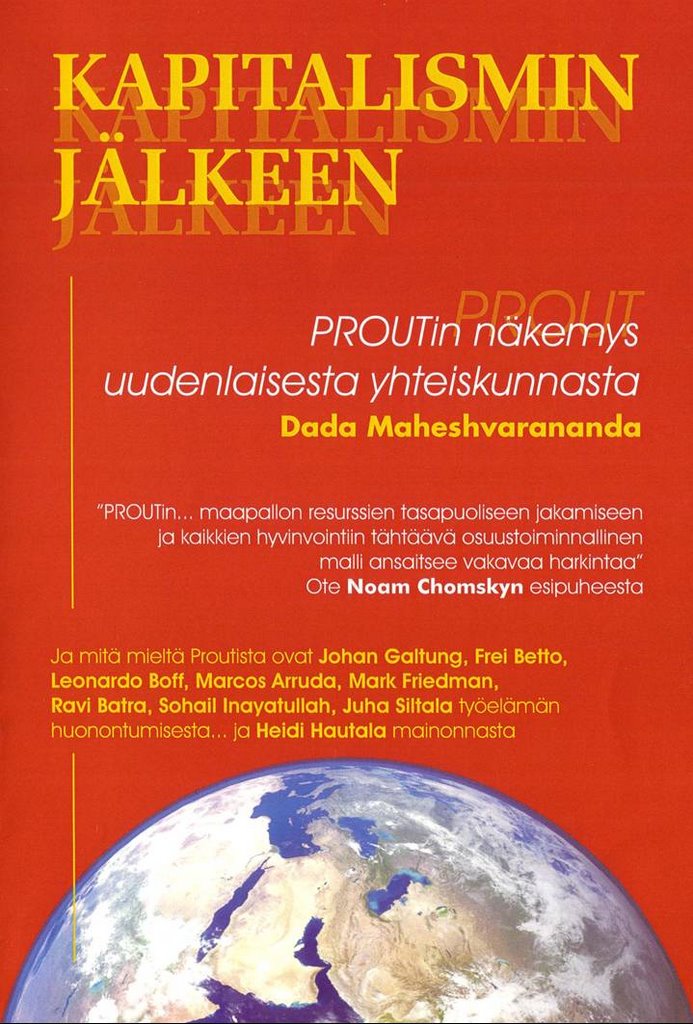
Dada Maheshvarananda, 53, who travels constantly around the world, describes himself with the words "lifetime volunteer". The monk, who is originally from the U.S.A, is a true global citizen. "I have travelled around the world for the last three years, and previously I lived for many years in
Maheshvarananda tries to connect universal, spiritual values to social change in the developing countries. He is involved in different school projects in the developing countries, for according to his opinion education is the best way to alleviate poverty. "I have written dozens of articles about the need for social change, and the book After Capitalism was published in 2003." Maheshvarananda is not content with just writing, but teaches yoga and meditation to prisoners in
The
With only a few days to prepare, a successful two-hour Prout lecture was given to 16 people in the public library. Professor Tapani Köppä, who has coordinated and taught about cooperatives for 40 years, came and explained about the 3000 existing worker-owned enterprises in the country. The major alternative radio station recorded a one-hour interview with Didi Annapurna and myself. We also took part in a peace march.
The recent discovery in Susiluola (in the
About 10,000 years ago the last Ice Age came to an end and the Finnish land surface began to re-emerge from under the receding ice and to rise up from the sea. Humans then came from
.
The evolution of some viprans (intellectuals) during this early tribal period can be seen in the shamans, wise and respected spiritual leaders of their tribe who were believed to have healing abilities and a special relationship with the spirit world. Their search for knowledge is expressed in some of the older epic poems of the Kalevala. However, the tribes for the most part continued to be led by warriors. The population of
The transition from a ksattriya-led to a vipra-led society started with the introduction of Christianity from
The publication in 1765 of Anders Chydenius’ book, The National Gain, proposing free trade (11 years before Adam Smith’s famous book, The Wealth of Nations), is a good indication of how capitalists (vaeshyas) were increasingly becoming the new power-brokers in
Starting in 1918 with the class war between the Red Guards and the Whites, some disgruntled ksattriyas and vipras tried unsuccessfully in various ways to lead shudras on a Communist platform to overthrow the vaeshyas. Despite the
According to Sarkar’s social cycle theory,
A fundamental change of consciousness is needed. Courageous fighters (ksattriyas) and thinkers (vipras) should lead a radical, grassroots popular transformation to establish a more orderly, disciplined and ethical society based on economic justice and solidarity.
According to the Finnish Government Institute for Economic Research (VATT), the top 10 percent of the population owns almost 40 percent of all the property and share capital. Much more economic inequality appears when calculating the wealth of the few thousand millionaires and billionaires, whose holdings are widely spread through nebulous financial networks. Greater tax breaks for the rich means the welfare state is weakening.
During the last 20 years, a large portion of the Finnish economy has been taken over by international investment funds, who own major shares of Nokia and the other large Finnish companies. Why is it that the majority of stores in
Unfortunately capitalism does not work very well for
Finnish people experience the psychological side effects of global capitalism. The materialistic, consumer outlook, where everything seems to have a price tag, supports the existential outlook, “I buy, therefore I am!” Yet I believe the Finnish people, like most people in the world, long for true peace, happiness and unconditional love, which are not really satisfied in a consumer culture. Instead, working ever harder just to increase their income, or just to survive, under increasing stress, people experience alienation, loneliness and depression. Tragically, the suicide rate in
We need something better: a holistic approach that fulfills the physical, mental and spiritual needs of each person. A world where nobody suffers poverty or hunger, where the resources are shared for the welfare of everyone. Where every human being is encouraged to develop their creativity, their talents, the higher dimensions of their being. How to do this is Prout’s vision for a new world.
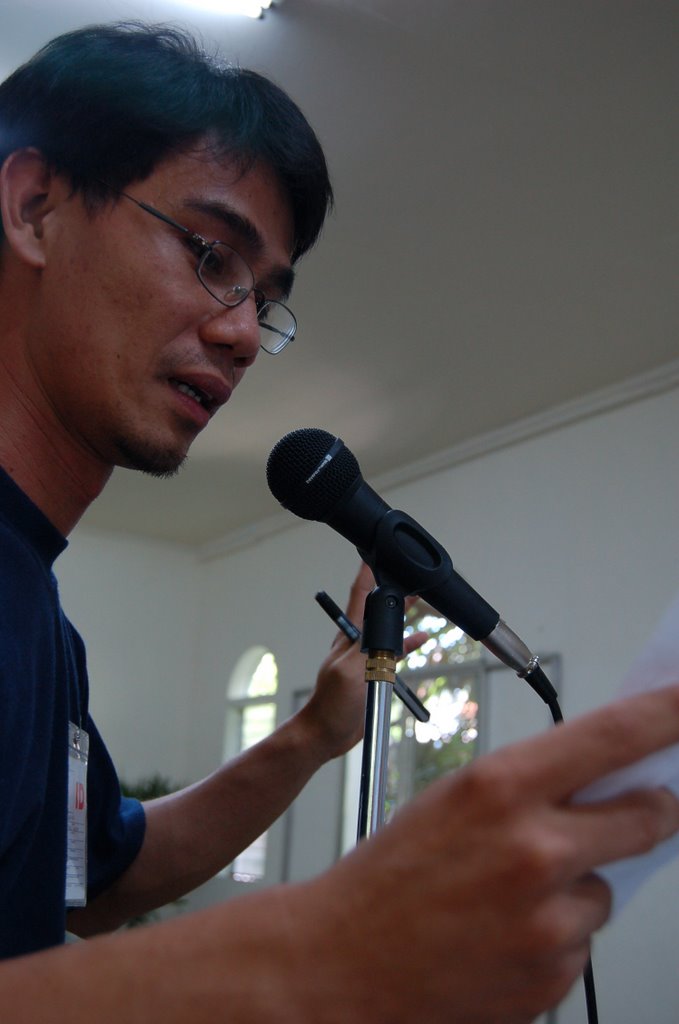
The National Prout Board of Maharlika is composed of: Dada Gayatrananda, Diivakar, Vishva, Rajnikanta, Subhrata, Paritosh, Jayadeva, Ajiir, Arun, Mahesh, Iishvar, Surendra and Ramesh. Their recent accomplishments include renovating part of the Proutist Universal office in Manila, regularizing the legal registration of PU, holding a monthly study circle, organizing two successful one-day leadership training sessions and a regular radio show (tel. +63-9203225249).
Ang Kasama Samaj activist leaders who attended the seminar were: Dada Devapriyananda, Manorainjan (a labor leader from Clark Airbase), Iishvara (Central Luzon), Ram Prasad (Baguio), Jagatmitra (Secretary General), Lalit Mohan, Parvati, Jagat (Cebu, former editor of Prout Times), Japamala (Cebu, Maharlika Artists and Writers Association), Shiva (Ilocos Norte) and Nareshvar. (Ang KaSaMa office: 11 Union Village, Barangay Culiat, Tandang Sora, Quezon City, tel. +63-2-931-4882, mobile: 09197863739) See www.angkasama.net
During my last 48 hours, I took a bus to
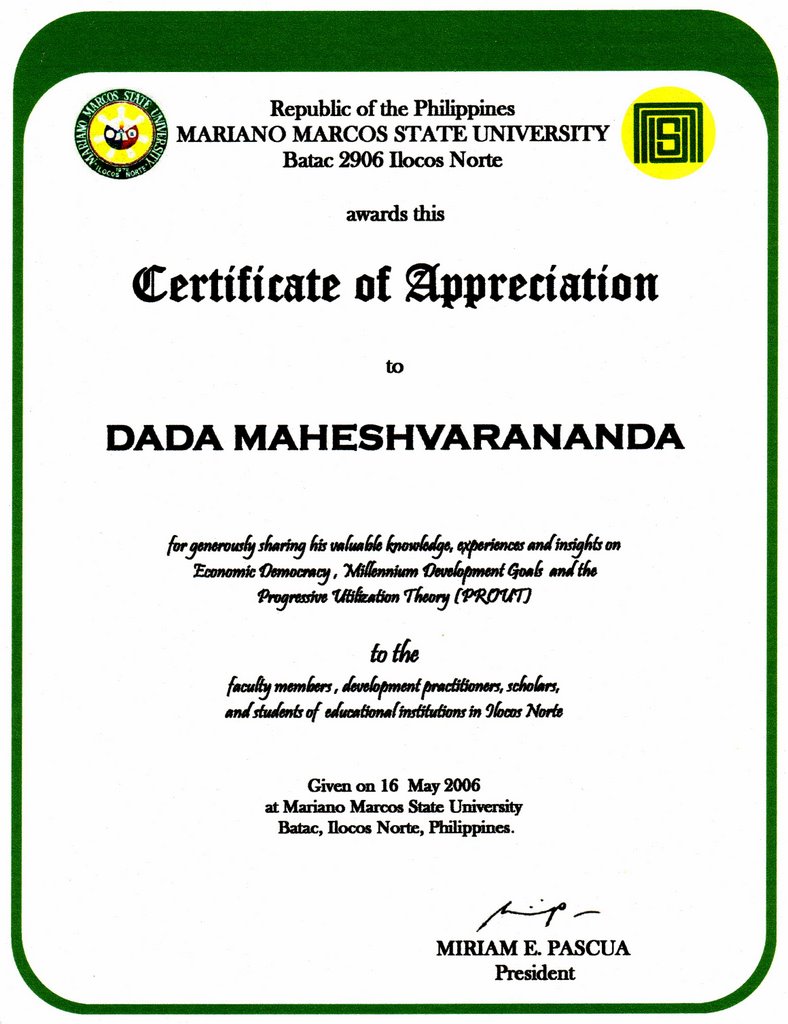
After seven blissful hours, I jumped on another bus to the far north of
I found a very inspiring speech that Sarkar gave during his June 1968 visit to Maharlika. He said:
“Movement in the physical realm means the construction of a society led by spiritual revolutionaries [sadvipras]… Sinners will oppose you, but you will have to face the challenge... You are human beings, because you are fighting against immoralists.
“In the psychic realm you have to establish righteousness by removing the germs of crude mentality. Everywhere in the world today the crude intellect dominates. It is your duty to replace it with your righteous intellect…
“In the spiritual realm, your task is to establish Cosmic ideation… It is your duty to show the right path to society in those three spheres...
“Work with the Supreme’s infinite power and with infinite speed. Victory is surely yours.”
(from “Accomplish Your Work with this Body Only”, A'nanda Vacana'mrtam Part 23)
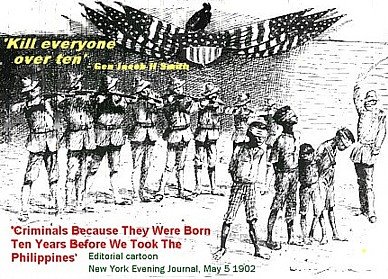
Empires began to appear soon after the first cities made the necessary administrative structures possible. Approximately 77 empires have existed in world history. Understandably, historians are not in complete agreement regarding the starting and ending dates of each one, and whether or not some should qualify.
P.R. Sarkar describes the psychological root of imperialism. When people become increasingly engrossed in materialism (what he called “carbonic pabula”) their mind gradually sinks towards crude matter. Greed increases, desiring the wealth of others. “Capitalism, state capitalism, communism, nationalism, communalism [groupism based on religion], parochialism [selfish pettiness or narrowness of views], provincialism [sense of superiority because of one’s province or area], socialism, caste-imperialism, male chauvinism, lingualism [that one’s language is superior]… are all the same psychic ailments in various forms and figures.”
The list below is arranged chronologically according to when the empire began. The present-day country where the seat of the empire was located is included if not obvious from the name.
76 empires have ended. Only one remains. It began in 1898 when it stole Maharlika (the

